Achyudhan Kutuva
PhD Student in Computational Biology at Pitt/CMU

I am a PhD student in the Joint Carnegie Mellon–University of Pittsburgh PhD Program in Computational Biology (CPCB), co-advised by Dr. James Faeder and Dr. William Hawse.
I study how T-cell identities emerge, persist, and change over time. T cells can take on different functions, and those functions may shift as conditions change. I want to understand the processes that shape these decisions and what can lead cells toward different states.
More broadly, I ask how cells respond when their surroundings change. Measurements from individual cells reveal patterns, but often do not show why those patterns occur. Mechanistic models let me explore how cellular processes could produce the behavior we observe, while machine-learning methods help identify patterns in how cells respond to change. Comparing these approaches with observations across conditions can help distinguish possible explanations, identify what remains uncertain, and suggest useful questions for future study. Together, they can deepen our understanding of how cell fate is shaped and how cells respond to change.
Current research
- T-cell fate and plasticity: I study how T-cell states develop and change, and how conditions can shift the course of cell fate. Understanding these transitions can help explain how cells with related origins acquire different functions and how those functions are maintained or altered over time.
- Mechanistic modeling and machine learning: I use mechanistic models to explore how cellular processes shape behavior, and machine-learning methods to study patterns in how cells respond to change. Together, these approaches help connect observations with possible explanations and guide further experiments. I also contribute to BNG3 and BNG Playground, software for building and exploring rule-based models.
selected publications
-
 Mathematical modeling of radiotherapy: impact of model selection on estimating minimum radiation dose for tumor controlFrontiers in Oncology, 2023
-
 STAT3 S727 phosphorylation drives pathogenic Th17 differentiation and neuroinflammation in autoimmune diseaseJournal of Neuroinflammation, 2025
-
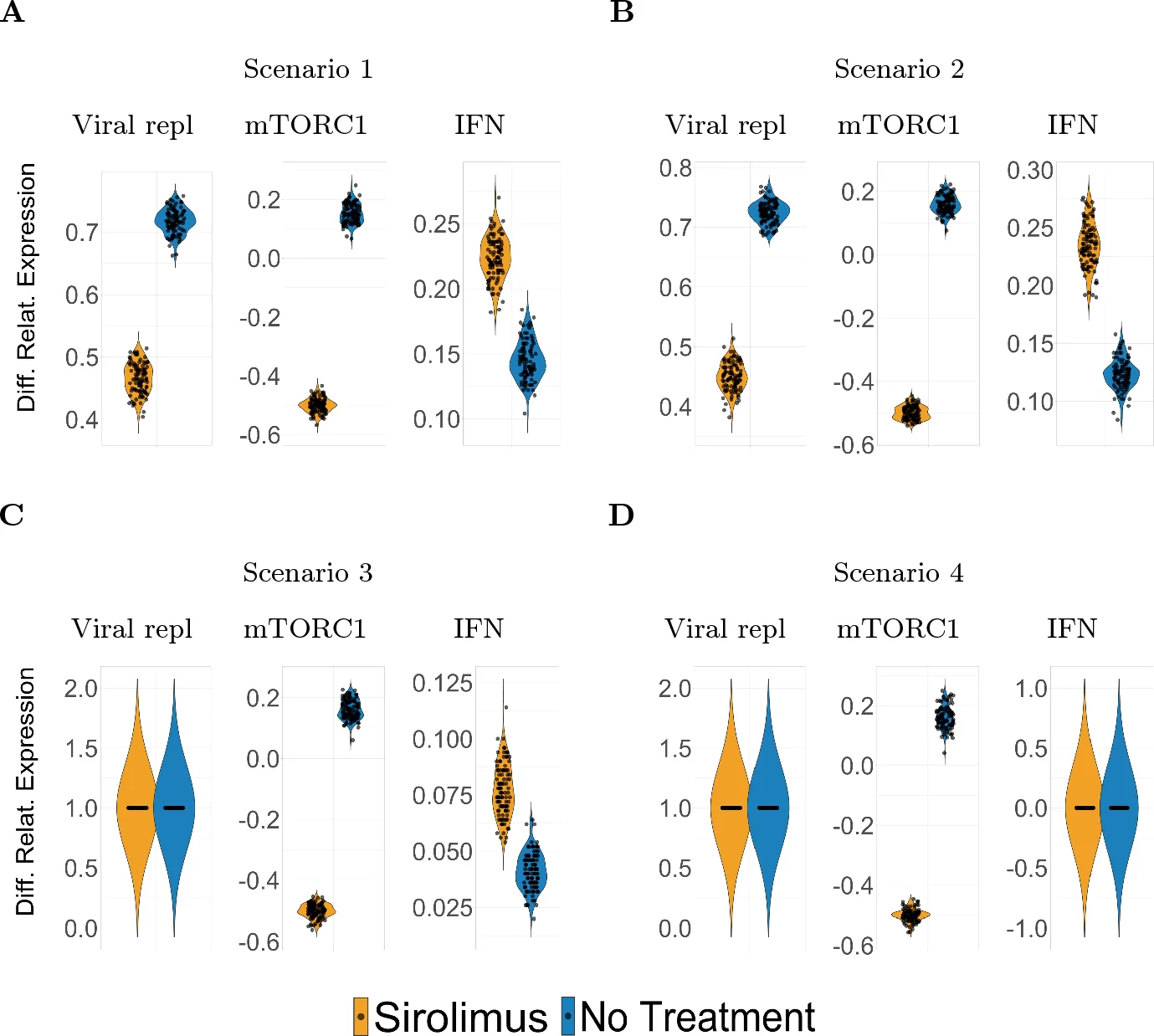 mTORC1 Promotes SARS-CoV-2 Replication and Attenuates Type I Interferon Responses in the Alveolar Epithelium: A Computational and Experimental StudyBulletin of Mathematical Biology, 2026

